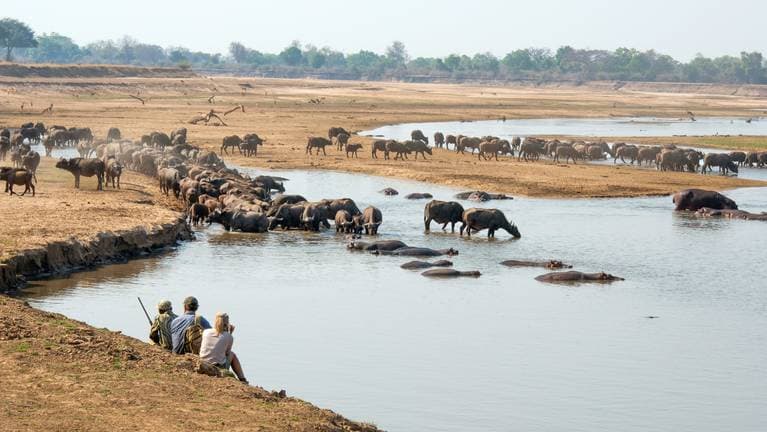
Buffalo
Where to see Buffalo in Nyerere
Heavy-set, horned bovines that live in large herds, famous for their resilience and formidable defence against predators.
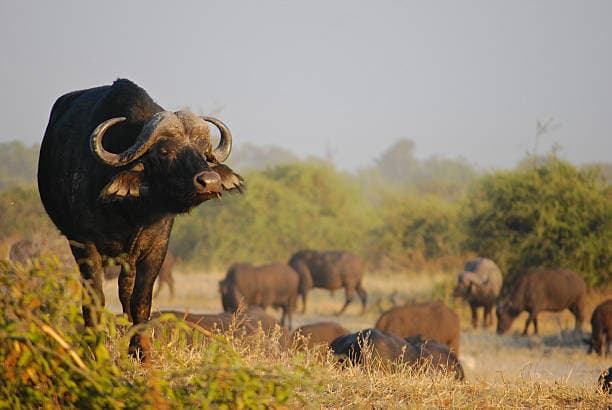
Quick Facts about Buffalo
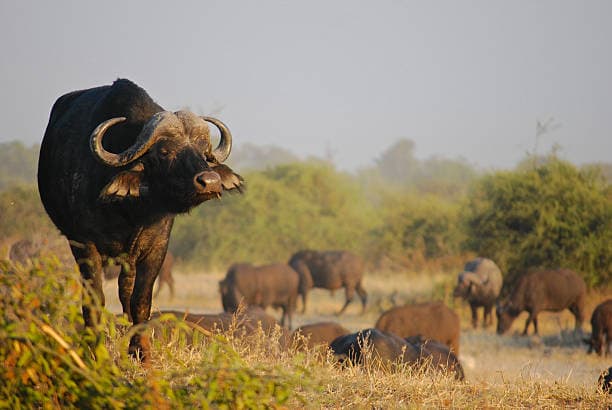
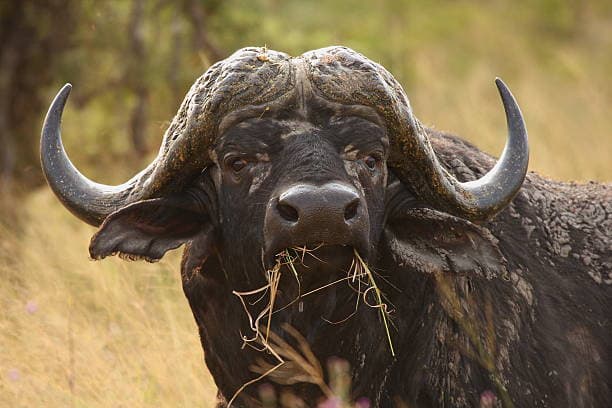
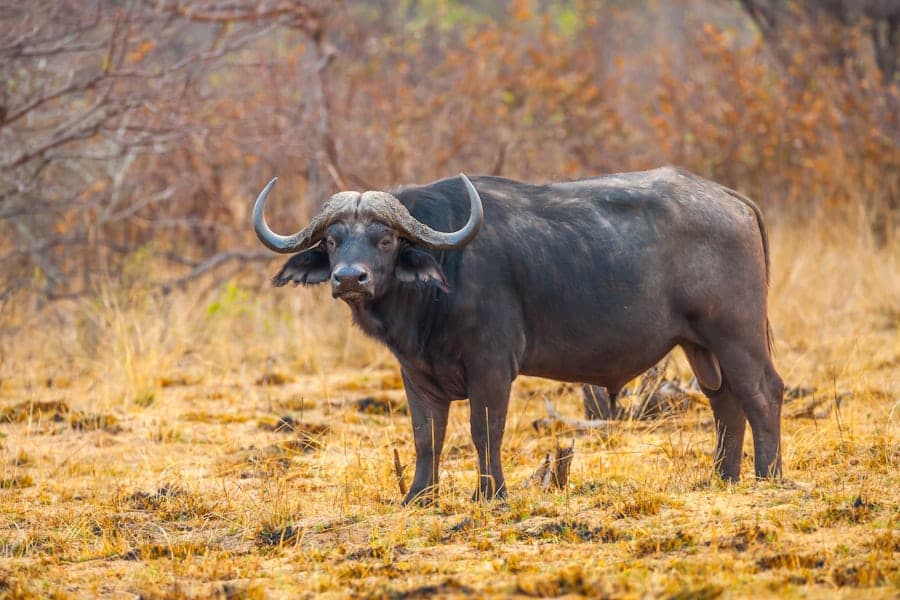
African buffalo (often called Cape buffalo) are powerful, gregarious bovids that roam savannahs, woodlands and wetlands. Recognised by their massive curved horns and dark hides, they are a cornerstone species of Africa’s grassland ecosystems.
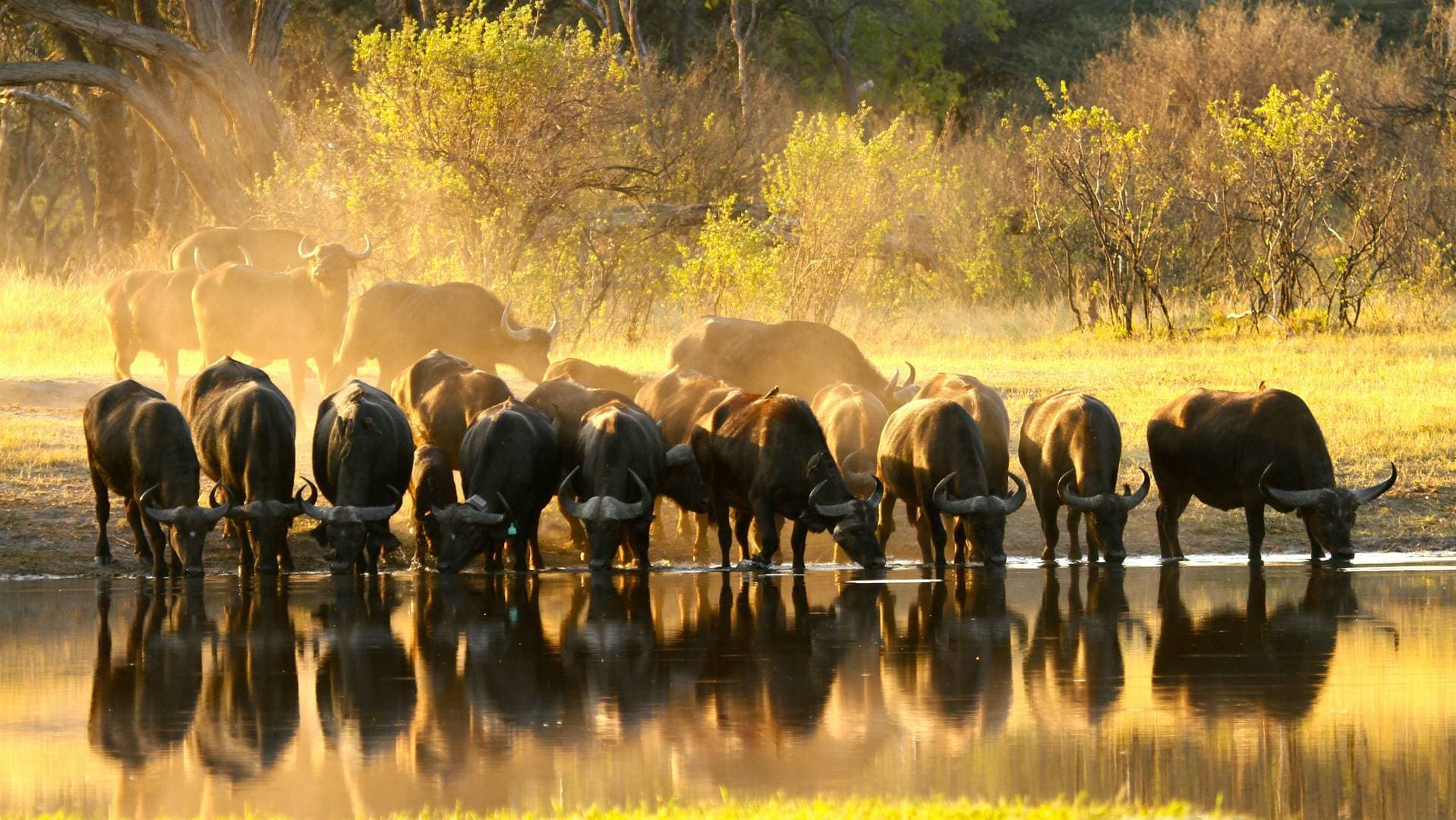
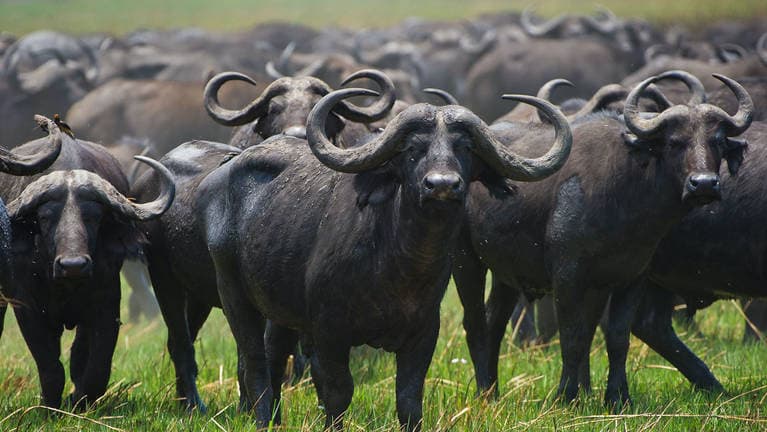
Buffalo live in herds ranging from a few dozen to several hundred animals, with old bulls sometimes forming smaller bachelor groups. Their collective vigilance and willingness to charge make them one of the continent’s most dangerous animals when threatened, even for lions.
By grazing extensively and wallowing in mud, buffalo shape vegetation patterns and provide habitats for birds and insects. Calves are usually born in the rainy season, when food is plentiful, and are protected within the herd’s centre.
Up to 900 kg
30 km/h+
50–500+
20 years
Safaris where you can see Buffalo in Nyerere
Where to see Buffalo in Nyerere
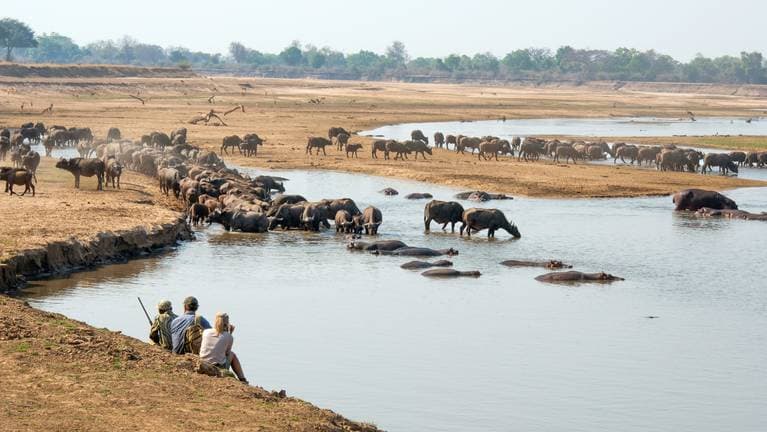
Buffalo roam the vast floodplains and woodlands of Nyerere National Park.
Top tips for viewing Buffalo
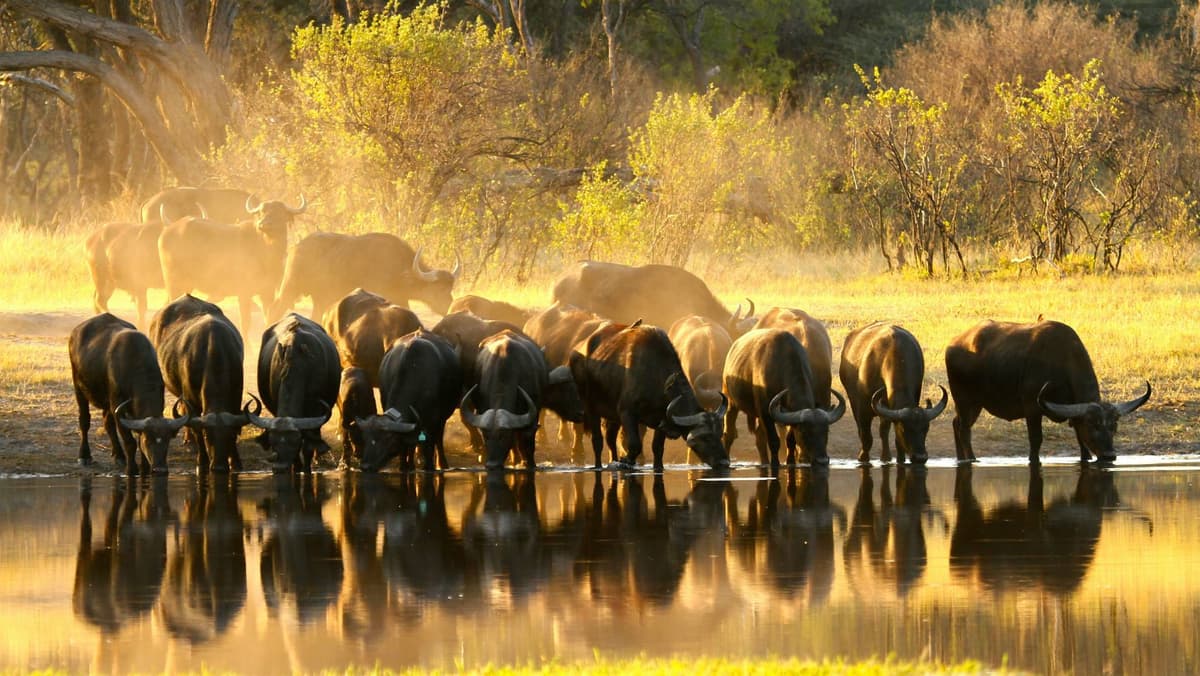
In Nyerere National Park, buffalo inhabit the park’s floodplains, woodlands, and riverine areas. Herds often gather near water sources, providing excellent opportunities for guided game drives.
The park is remote and less visited, allowing for immersive wildlife encounters. Observers can witness natural herd behaviour, including calf protection, group movement, and social interactions.
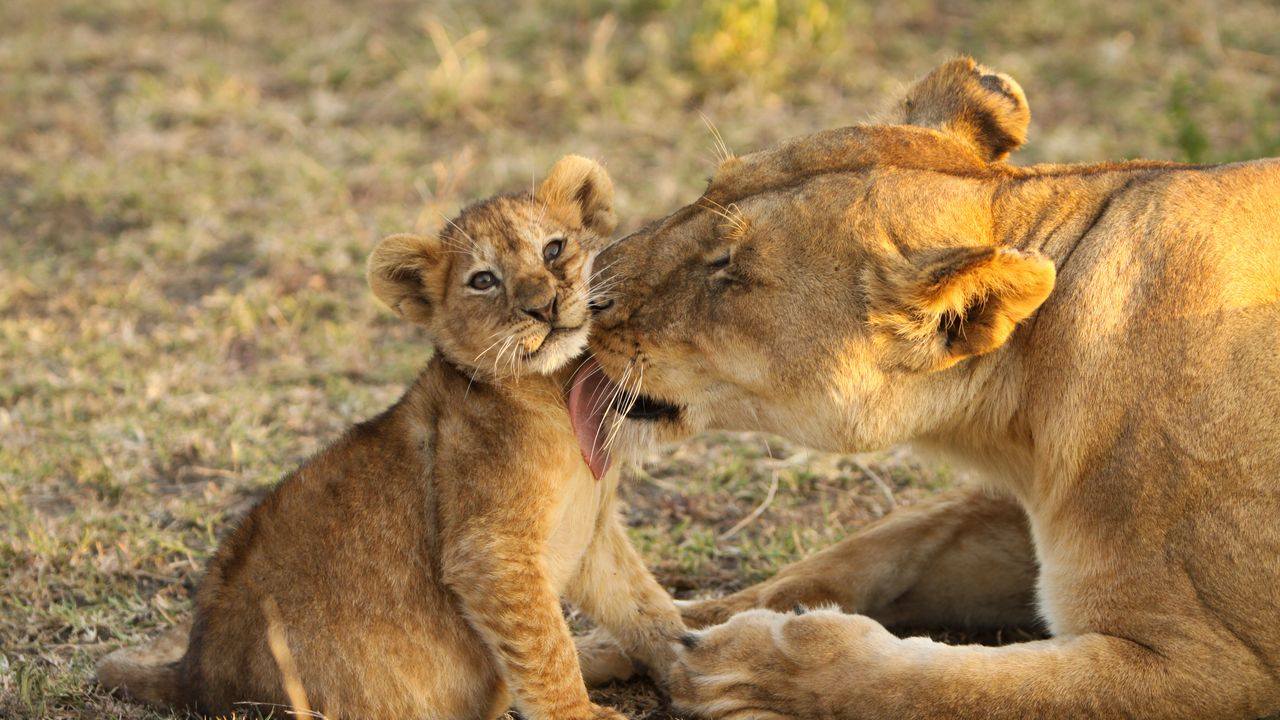
Nyerere’s floodplain ecosystem also influences herd movement and interactions with predators like lions and hyenas. Early morning and late afternoon drives are best for sightings and photography.
Frequently Asked Questions
Find answers to the most common questions about this tour.
1
When is the best time to see buffalo in Nyerere?
Morning and late afternoon drives give the best chances of active herd sightings.
2
Are buffalo herds easy to find in Nyerere?
Yes, the park’s open floodplains and water sources make sightings reliable.