Tanzania
Kilimanjaro
Stand on the roof of Africa. No ropes. No experience. Just you and the mountain.
Elevation
5,895m (19,341 ft) - Africa's highest peak
Climate Zones
Five distinct zones from tropical rainforest to arctic summit
Routes
Six established climbing routes with varying difficulty and duration
Best Time
January-March (quiet) and June-October (driest)
UNESCO Status
World Heritage Site since 1987
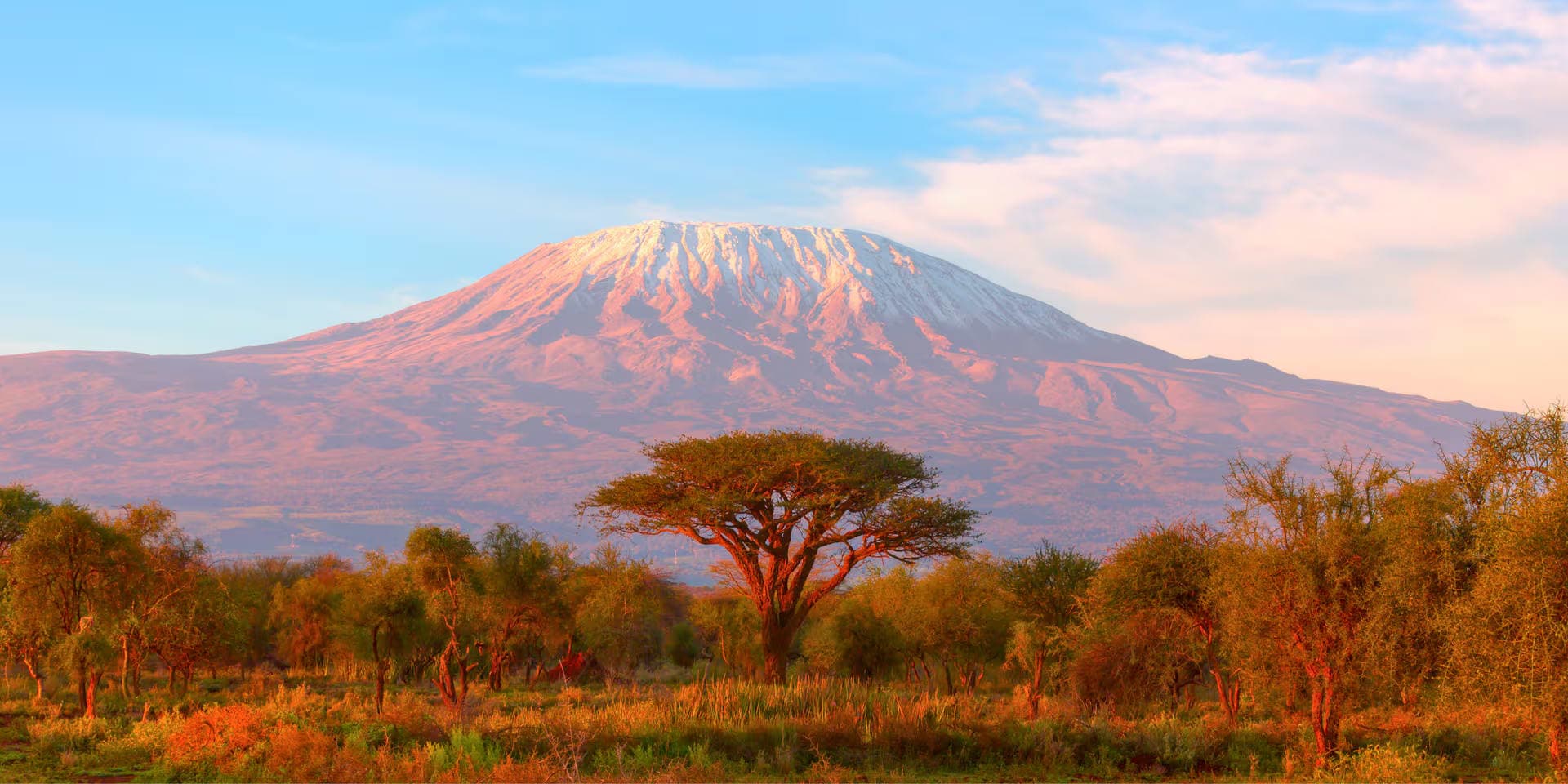
Kilimanjaro doesn't ask you to be a mountaineer - it asks you to keep walking. Five climate zones in five days. Equatorial heat to arctic cold. Rainforest canopy to glacial summit. At 5,895 metres, it is the highest free-standing mountain on Earth, and every year thousands of ordinary people stand on top of it. The question isn't whether you can do it. It's which route you'll choose.
No Technical Climbing Required
Kilimanjaro is a trekking peak. You walk to the summit. There are no ropes, no harnesses, no ice axes. What you need is fitness, mental resilience, and a good guide who knows when to push and when to rest. We provide the guide. You bring the determination.
Five Worlds in One Mountain
Start in banana plantations. Enter a moss-draped rainforest where colobus monkeys swing overhead. Emerge onto open moorland scattered with giant lobelias. Cross a lunar desert of volcanic scree. Summit under stars on an arctic ice field. No other trek on Earth covers this range in a single ascent.
Six Routes, One Summit
Each of Kilimanjaro's six routes has a distinct character. Machame is the most popular for its scenic variety. Lemosho offers the best acclimatization and the quietest first days. Marangu is the only route with hut accommodation. The Northern Circuit is the longest, the quietest, and has the highest summit success rate at 95%.
Experience Designer
Brighton Mboya
Regions of Speciality:
Tanzania, Rwanda, Uganda
Trip Designer
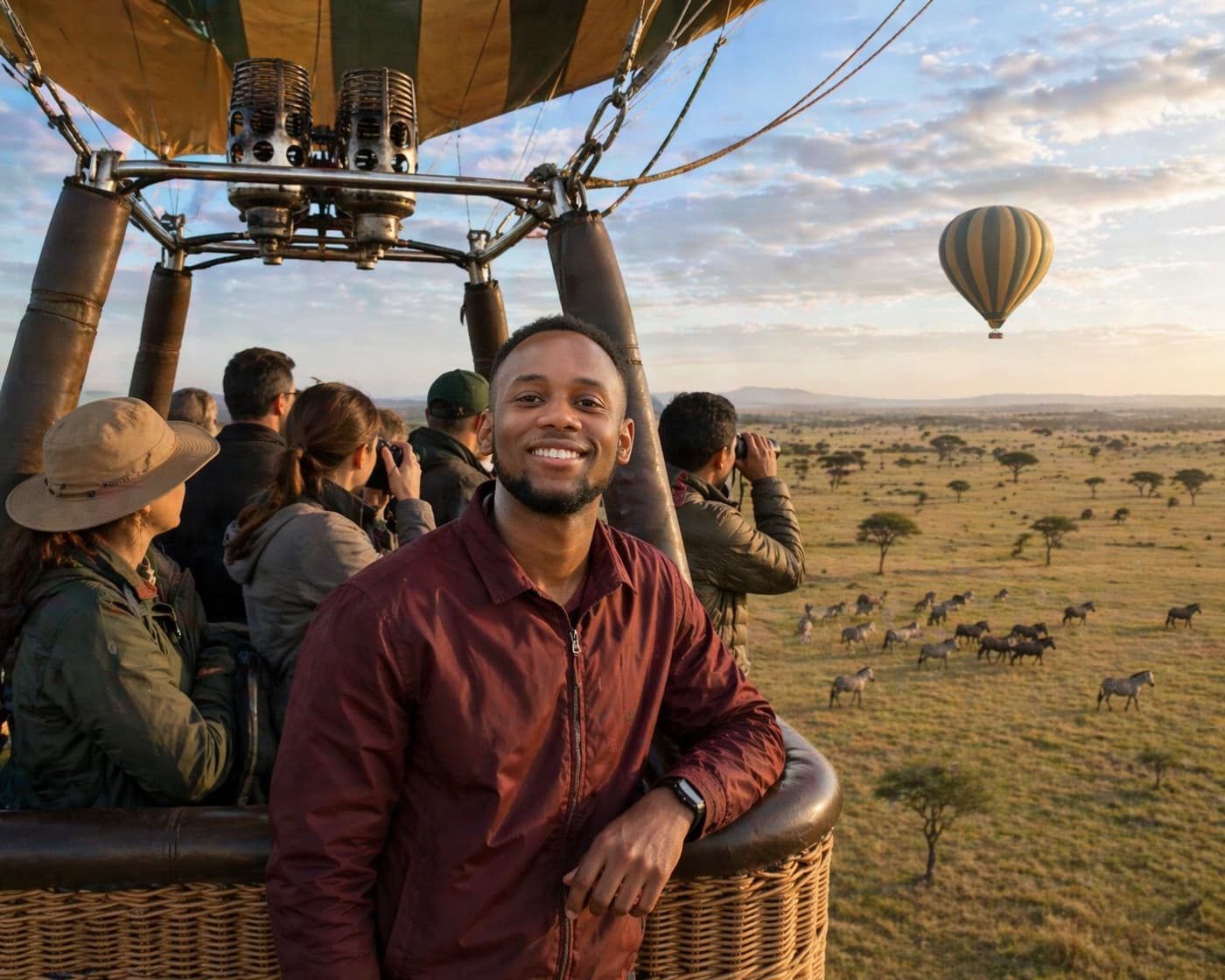
Brighton has spent the last decade building safaris across the East African circuit, from the Serengeti's migration corridors to the misty volcanoes of Rwanda and the Bwindi Impenetrable Forest in Uganda. He started out guiding walking safaris in Tarangire, then moved into gorilla and chimp trekking after years escorting researchers through the Albertine Rift. His itineraries turn on the small details most operators skip: the right camp on the right night of the migration, a permit window that lines up with the gorilla family closest to your lodge, a quiet bush airstrip that saves a full day on transfer.
Trip Inspiration

Snapshot of a Day
Wake at midnight. Headlamp on. Six hours of switchbacks through volcanic scree under a dome of stars. Reach Stella Point as the eastern horizon turns pink. Walk the final ridge to Uhuru Peak. Watch the sunrise light up the glaciers. You are standing on the highest point in Africa.
Trip Inspiration
The Summit & Safari
Summit Kilimanjaro via the Machame Route, then drive straight into the Serengeti for three days of game drives. End at the Ngorongoro Crater - the world's largest intact volcanic caldera, teeming with lions, elephants, and flamingos. This is the trip that people talk about for the rest of their lives.
Recommended Duration: 10-12 days
Best Time To Go: January - March, June - October
Things to See & Do: Summit trek, Serengeti game drives, Ngorongoro Crater, Chagga village visit
Don't Miss Out On: Summit sunrise, first Serengeti game drive, crater floor picnic

Snapshot of a Day
Trek across the Shira Plateau as the afternoon light turns the volcanic rock amber. Giant groundsels - prehistoric plants found nowhere else - stand like sentinels. Ahead, the Western Breach wall rises 800 metres. Camp at Lava Tower (4,630m), eat hot soup, sleep to the sound of wind on rock.
Trip Inspiration
Lemosho: The Scenic Route
Eight days on the mountain's most beautiful route. Start from the west through pristine rainforest where few trekkers go. Cross the Shira Plateau - a high-altitude desert the size of a small country - with Kibo peak filling the eastern sky. The extra days mean better acclimatization and a 90%+ summit success rate.
Recommended Duration: 8 days
Best Time To Go: June - October
Things to See & Do: Rainforest trekking, Shira Plateau crossing, Barranco Wall scramble, summit push
Don't Miss Out On: Shira Plateau sunset, Barranco Wall scramble, glacier views from Stella Point

Snapshot of a Day
Walk through a Chagga coffee farm. Your host picks ripe cherries, roasts them in a cast-iron pan, grinds them with a wooden mortar. You drink the freshest coffee of your life while looking up at the snow-capped peak you will stand on in four days. This is why you came to Tanzania.
Trip Inspiration
Culture, Coffee & Climb
Before you climb, understand where you are. Spend two days with the Chagga people on Kilimanjaro's lower slopes - roast coffee over an open fire, hike to a waterfall hidden inside a volcanic tunnel, eat lunch in a family home. Then ascend the Marangu Route, the only path with hut accommodation, sleeping under a roof every night.
Recommended Duration: 7 days
Best Time To Go: Year-round (best June - October)
Things to See & Do: Coffee farm tour, waterfall hike, village lunch, Marangu Route climb with hut stays
Don't Miss Out On: Fresh Chagga coffee, Materuni waterfall, Horombo Hut sunset
Featured stays

Kaliwa Lodge
Location: Machame, Kilimanjaro foothills

Aishi Machame Hotel
Location: Machame Gate area, Kilimanjaro

Kilimanjaro Mountain Resort
Location: Marangu, Kilimanjaro Region
Testimonials
“I cried at the summit. Not because it was hard - because I didn't think I could do it, and then I did.”
Our guide Elias made all the difference. He knew exactly when to slow down, when to tell a joke, when to push us forward. On summit night he walked beside me for six hours in the dark, adjusting my pace, reminding me to drink water, pointing out constellations I'd never seen. When we reached Uhuru Peak at sunrise, he hugged me and said "You did this." I'll never forget that moment.
— Sarah J. - California, US
Process
Step 1
Let's connect
Whether you have a specific trip in mind or are looking for inspiration, get in touch with your travel preferences, and one of our specialists will kick off the planning.
Step 2
Detailed Brief
After a conversation to learn more about your trip, you will receive details on an adventure with us, including activities and accommodation options in the destinations.
Step 3
Customized Itinerary and Confirmation
Collaborate with your specialist to adjust and finalize the itinerary. A per-person trip cost is presented once the itinerary is confirmed.
Step 4
Support, Start to Finish
From the moment you arrive until your trip ends, our team is with you. Experienced guides, porters, and a 24/7 support line ensure your safety and enjoyment.
Good to know
Altitude
Altitude sickness is the number one reason climbers don't summit. It has nothing to do with fitness - it's about acclimatization. That's why we recommend routes of 7 days or longer. The extra days let your body adjust gradually. We also carry pulse oximeters, supplemental oxygen, and our guides are trained in altitude medicine.
Weather
You will experience every season in one week. Gate temperature: 25°C. Summit temperature: -20°C. Rain is likely in the forest zone. Wind is fierce above 5,000 metres. Summit night is the coldest. Pack layers, not bulk - a merino base layer, fleece mid-layer, and a windproof shell will get you through most conditions. Your summit down jacket is for the final push.
What We Provide
Everything except your personal clothing and boots. We supply tents, sleeping mats, dining tent with table and chairs, a full kitchen crew, toilet tent, and all meals on the mountain. Our staff-to-climber ratio is among the highest on Kilimanjaro - typically 3 crew members per trekker. You carry only a daypack with water, snacks, and layers.
Kilimanjaro safaris

Kilimanjaro Rongai Route - 7 Day Climb
Approach Kilimanjaro from the quiet northern side near the Kenya border. The driest route on the mountain, ideal for shoulder season climbing with the dramatic Mawenzi Tarn campsite.

Kilimanjaro Umbwe Route - 6 Day Climb
The steepest and most direct route up Kilimanjaro, for experienced trekkers seeking a raw, uncrowded challenge. Dramatic forest approach through the most atmospheric trail on the mountain.

Kilimanjaro Lemosho Route - 8 Day Climb
The best overall route up Kilimanjaro, approaching from the pristine western rainforest. Superior acclimatization profile, diverse scenery, and 90%+ summit success rate on this 8-day itinerary.
Kilimanjaro Northern Circuit - 9 Day Climb
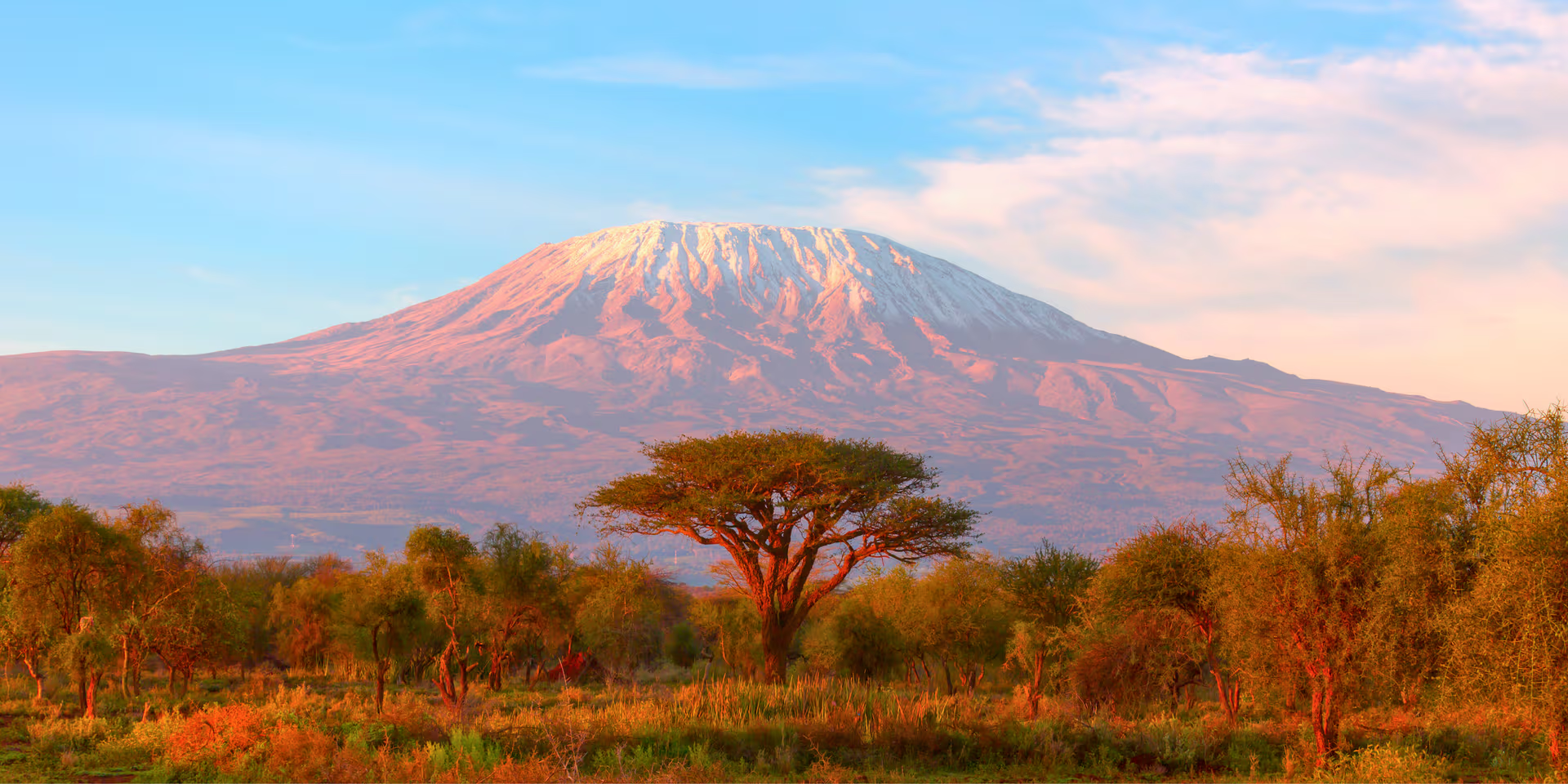
The ultimate Kilimanjaro experience: 9 days circumnavigating the mountain for the best acclimatization and a 95% summit success rate. Includes the remote northern traverse that no other route visits.

Kilimanjaro Machame Route - 7 Day Climb
Summit Kilimanjaro via the spectacular Whiskey Route, the mountain's most popular path. Features the exhilarating Barranco Wall scramble and diverse scenery across all five ecological zones.
Kilimanjaro Marangu Route - 5 Day Climb
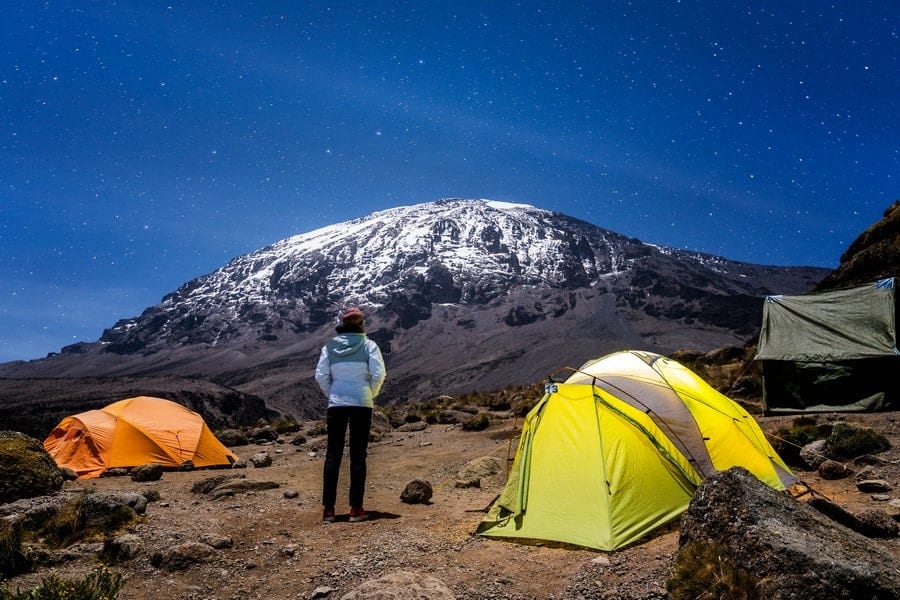
Climb Kilimanjaro via the classic Coca-Cola Route with hut accommodation. The most affordable route to the summit, following the only path with mountain huts instead of tents.
Frequently Asked Questions
No. Kilimanjaro is a trekking peak - you walk to the top. No ropes, no technical equipment. You need reasonable fitness (able to hike 6-8 hours daily for several days) and mental determination. Our guides handle everything else.
It depends on the route and duration. The 5-day Marangu route has about a 65% success rate. The 7-day Machame achieves around 85%. The 8-day Lemosho reaches 90%+. The 9-day Northern Circuit - our most recommended route - hits 95%. Longer routes mean better acclimatization and higher success rates.
Our all-inclusive trips range from $1,800 (5-day Marangu) to $3,500 (9-day Northern Circuit). This covers park fees, professional guides, porters, all meals on the mountain, camping equipment, airport transfers, and pre/post-climb accommodation. The only extras are personal gear, travel insurance, and tips for the crew.
The two main windows are January to March (drier, fewer climbers, colder summit temperatures) and June to October (the most popular season with the clearest skies). Avoid April-May (heavy rains make trails muddy and dangerous) and November (short rains). We run trips year-round but recommend the dry seasons for the best experience.
Start training 8-12 weeks before your climb. Focus on cardiovascular fitness (hiking with a loaded daypack, stair climbing), leg strength (squats, lunges), and core stability. The single best preparation is long day-hikes with elevation gain. You don't need to be an athlete - but you should be comfortable hiking 6-8 hours with a 5kg pack.
Altitude sickness (AMS) is common above 3,500m and is the main reason climbers don't summit. Symptoms include headache, nausea, and fatigue. Our guides carry pulse oximeters and supplemental oxygen, and are trained to recognize symptoms early. The key prevention is choosing a longer route (7+ days), staying hydrated (3-4 litres daily), and ascending slowly - pole pole, as we say in Swahili.
Everything except your personal clothing and boots. We provide: professional certified guides, porters (3 crew per climber), all meals on the mountain, camping equipment (tents, sleeping mats, dining tent), toilet tent, park entry fees, rescue fees, airport transfers, and one night pre-climb accommodation in Moshi.
For first-time climbers wanting the best balance of scenery and success rate, we recommend the Lemosho Route (8 days, 90%+ success). For budget-conscious climbers, the Marangu Route (5-6 days) is the most affordable and the only route with hut accommodation. For the highest success rate and most remote experience, the Northern Circuit (9 days, 95%) is unmatched.
Ready to plan your Kilimanjaro adventure?
Tell us about your dream trip and we'll craft a bespoke itinerary around your interests and timeline.
Get In Touch