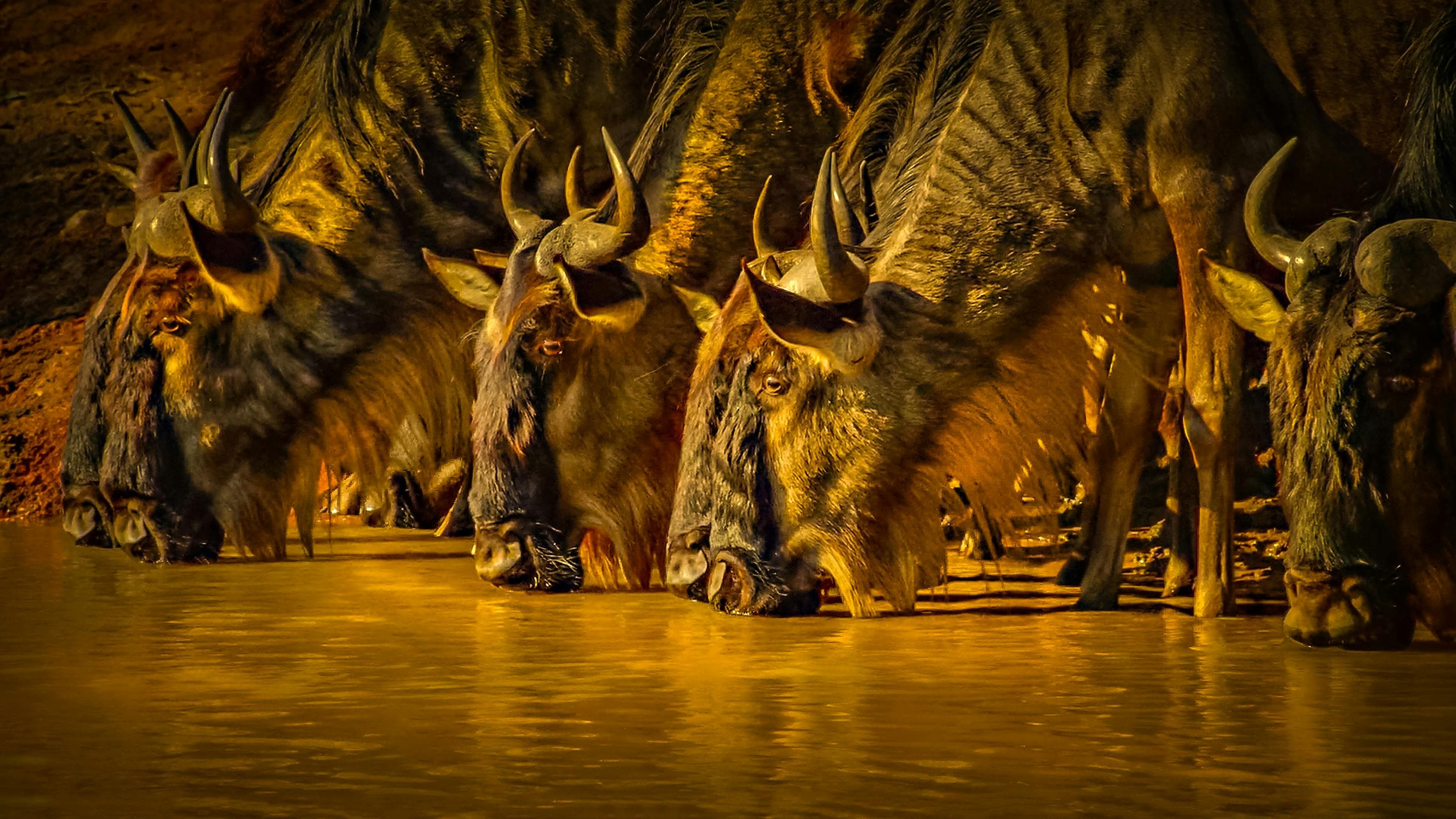
Wildbeest
Where to see Wildbeest in Nyerere
Iconic grazers of the African savannah, famed for their massive seasonal migrations.
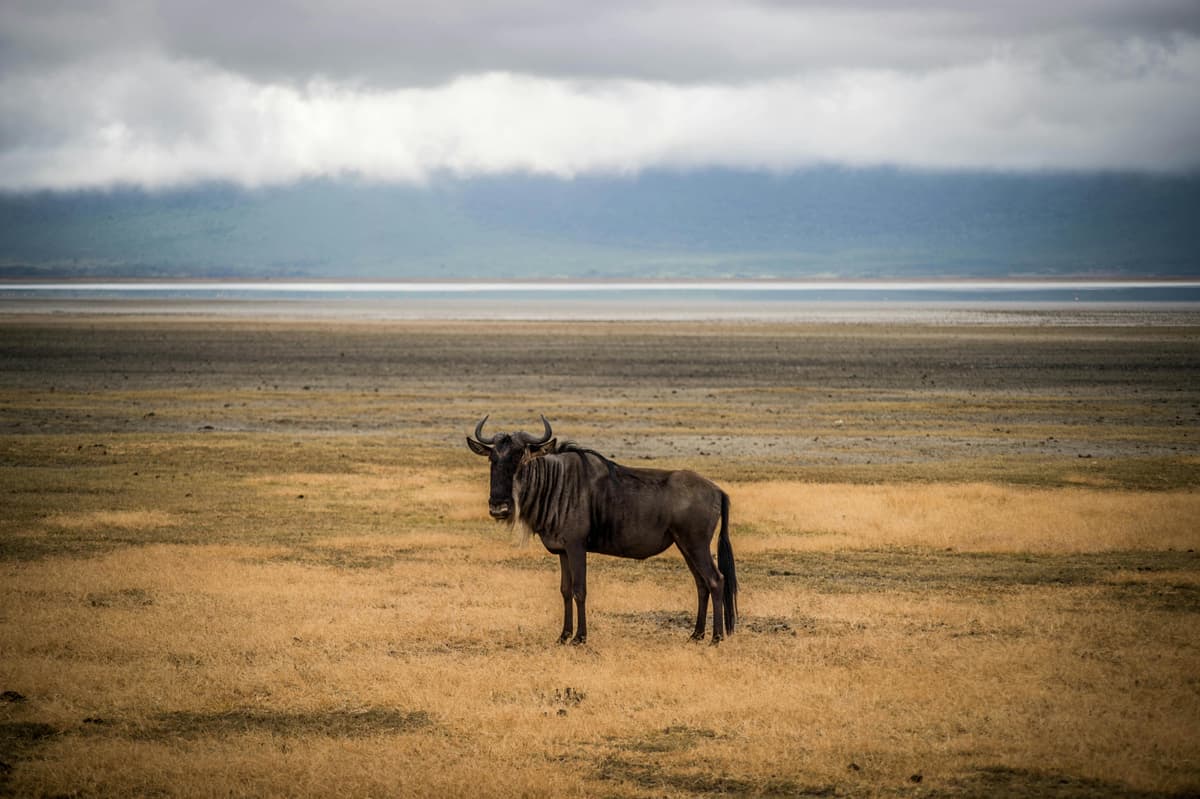
Quick Facts about Wildbeest
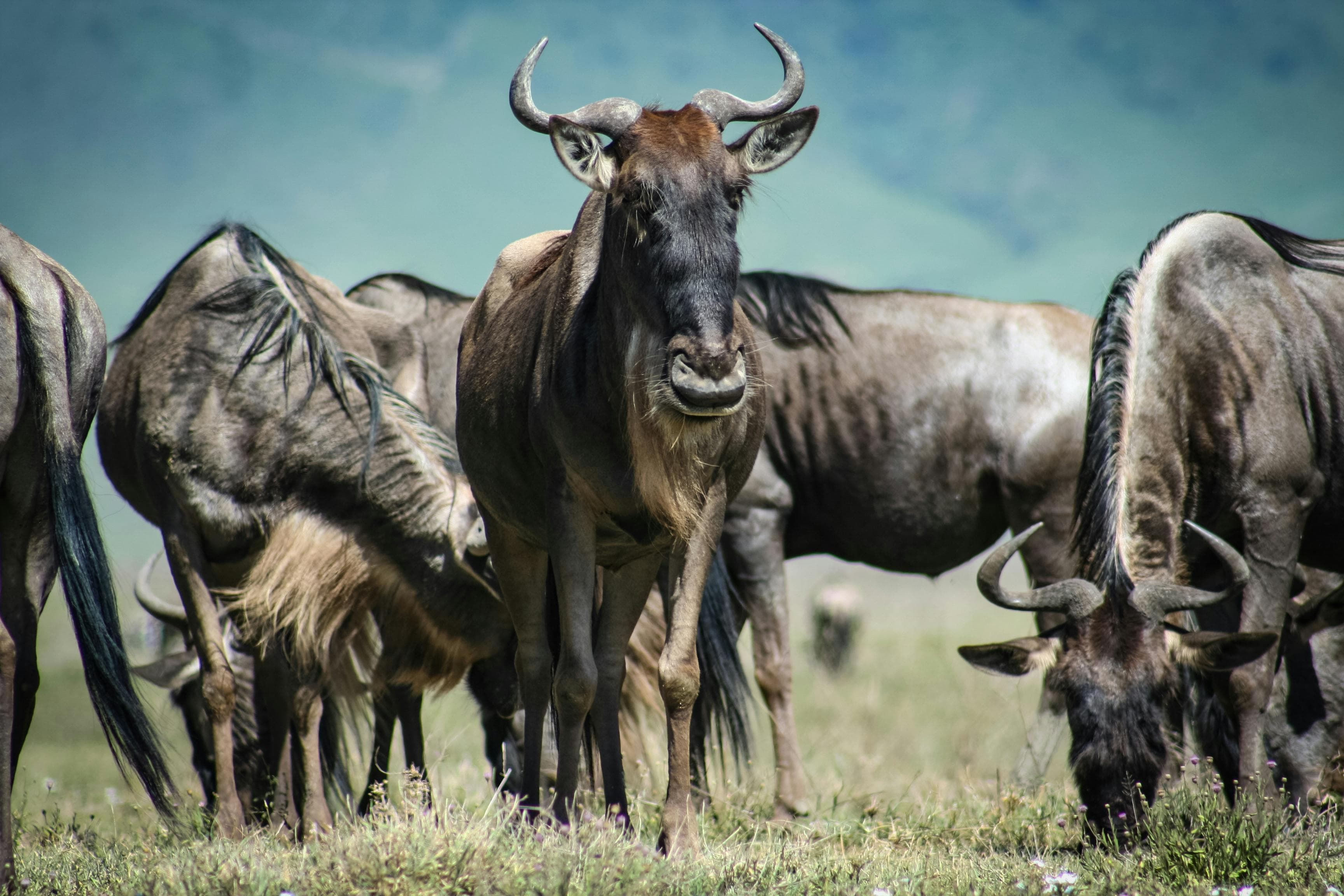
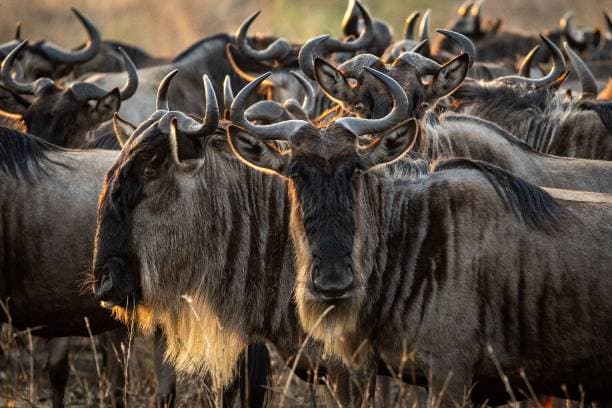
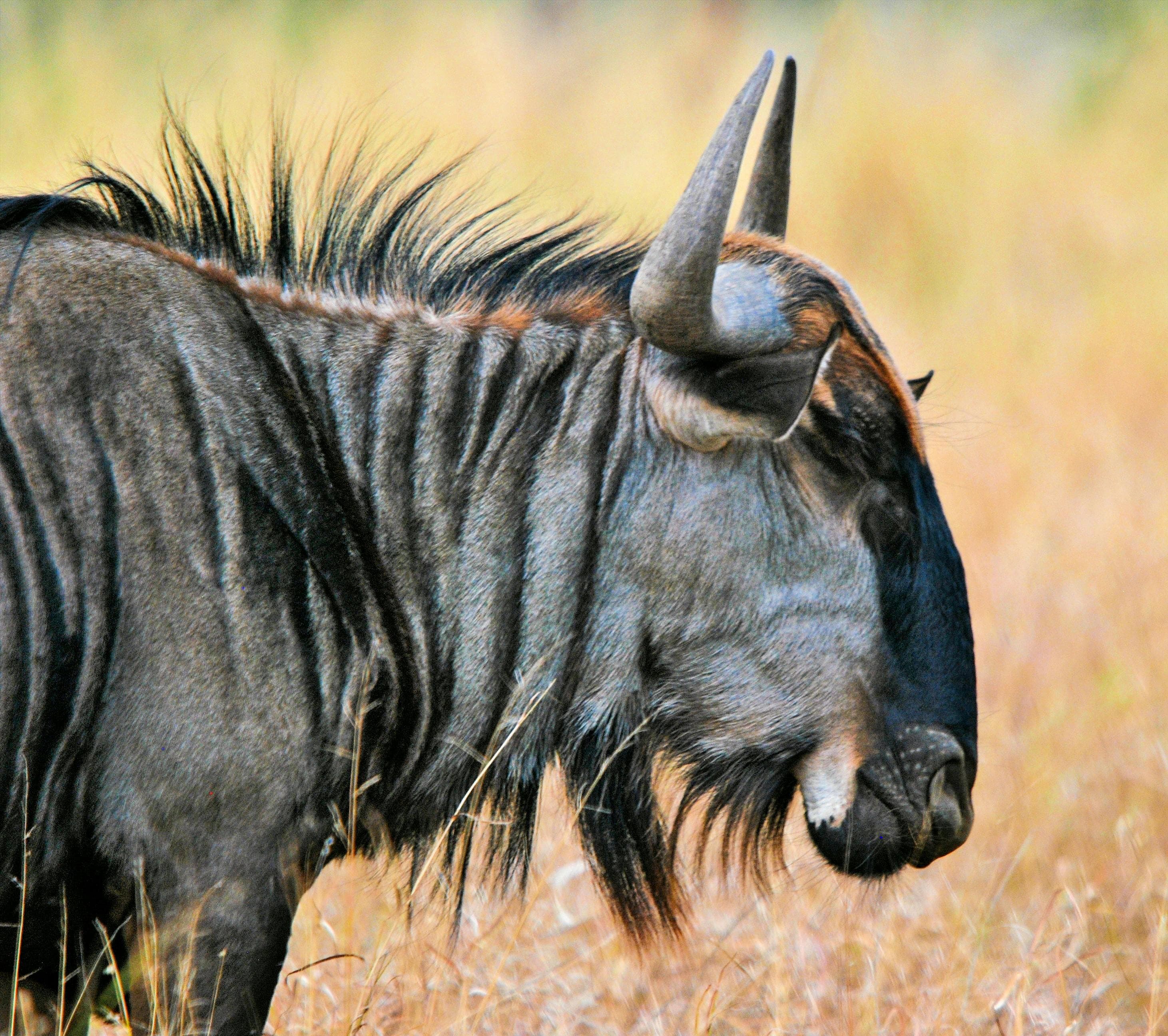
Wildebeest, also known as gnus, are large antelopes with distinctive curved horns and robust bodies. They live in herds that can number in the thousands, traveling across savannahs in search of fresh grass and water. Their migrations are synchronized with the rains and the availability of pasture, creating one of the most spectacular wildlife events on Earth.
These herbivores play a key ecological role by grazing extensively, which stimulates new plant growth and sustains predator populations. Calves are born during the rains when food is abundant, ensuring high survival rates despite the presence of predators. Herd behaviour is highly coordinated, with individuals constantly on alert and guided by older members during migrations.
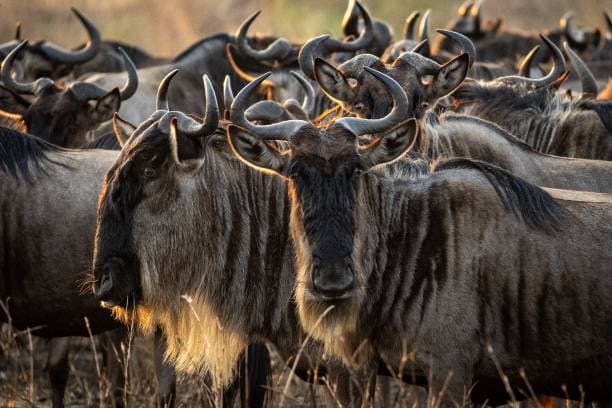
Wildebeest are highly social, often mixing with zebras and other grazers. Observing them in action, especially during river crossings or mass movements, offers unforgettable experiences and insights into the dynamics of Africa’s plains ecosystems.
2 species
Up to 80 km/h
1–2 years
12–20 years
Safaris where you can see Wildbeest in Nyerere
Where to see Wildbeest in Nyerere
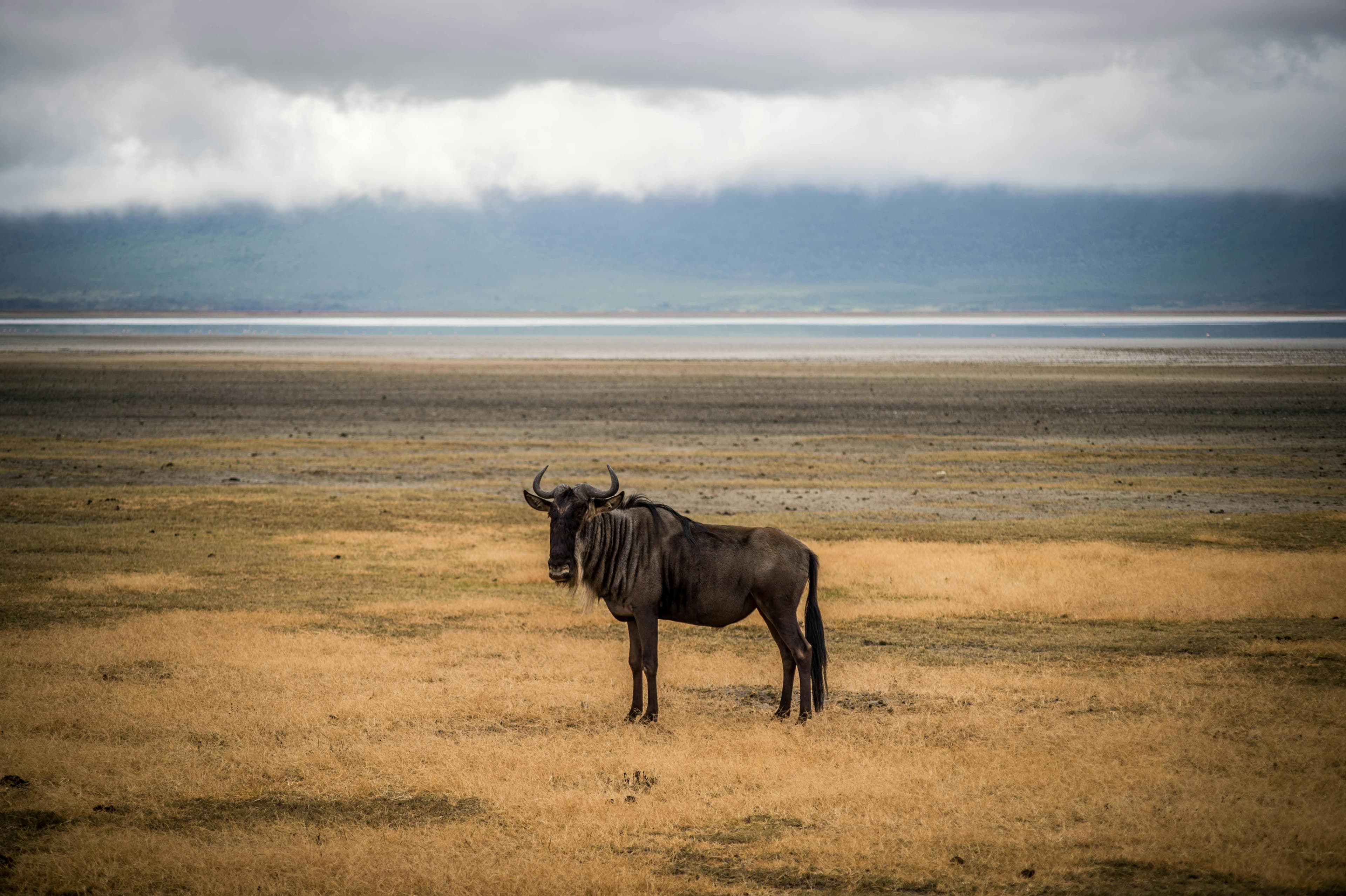
Scattered wildebeest herds roam Nyerere’s floodplains and open woodlands.
Top tips for viewing Wildbeest
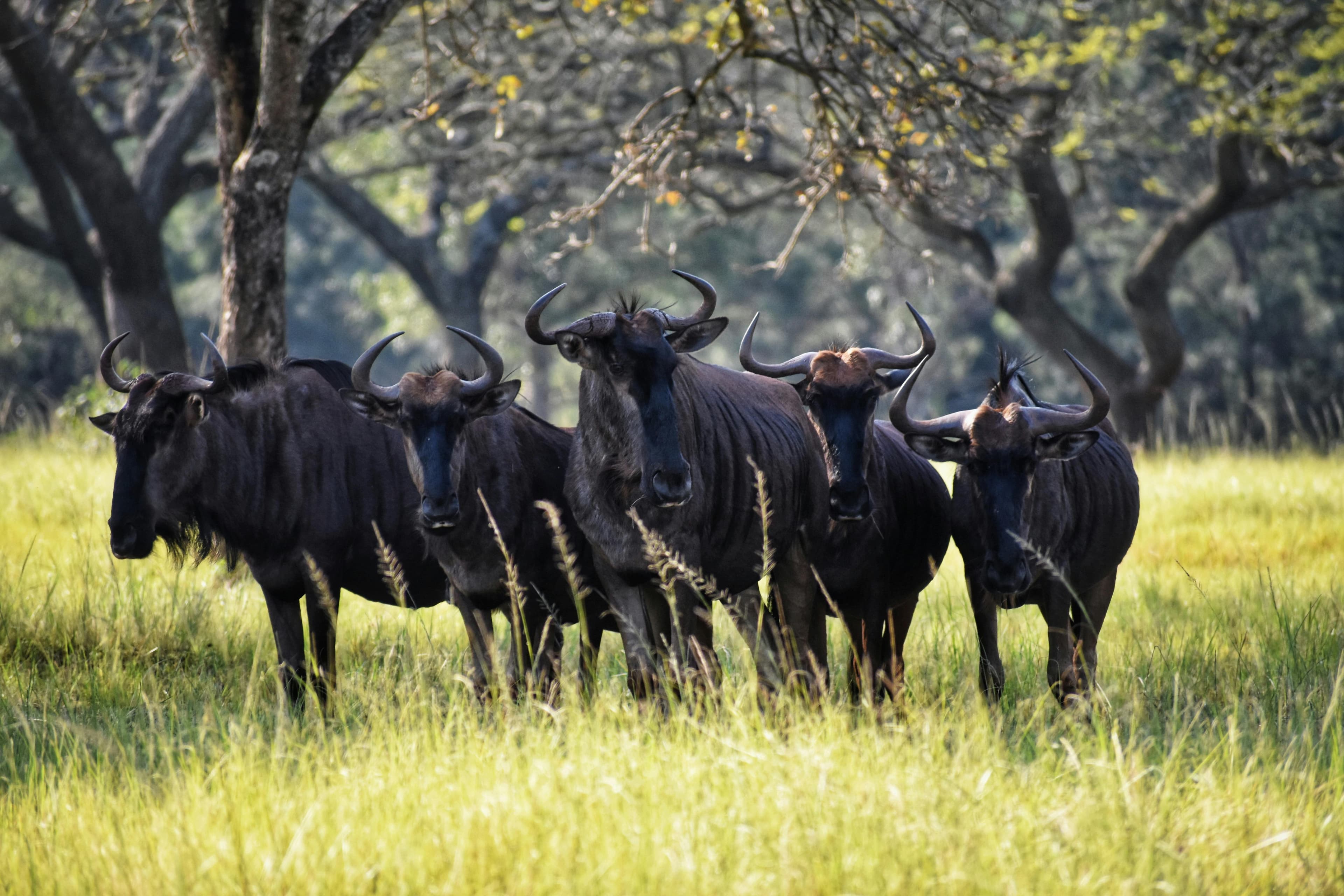
Nyerere National Park has smaller, scattered wildebeest herds that graze across floodplains and lightly wooded areas. Unlike the northern parks, the herds are less dense but still provide excellent wildlife viewing opportunities.
Visitors may observe interactions with zebras and other antelopes as they move between feeding areas and water points. Early morning and late afternoon drives reveal active grazing and social behaviours.
Because Nyerere is large and lightly visited, guided multi-day safaris offer the best chance to see these herds while learning about their migration routes and herd dynamics.
Frequently Asked Questions
Find answers to the most common questions about this tour.
1
Where are wildebeest found in Nyerere?
Across floodplains and lightly wooded areas, often moving between feeding grounds and water sources.
2
How large are the herds?
Herds are smaller and scattered compared to northern parks, usually a few dozen individuals.
3
Best time to observe?
Early morning and late afternoon for active grazing.
4
Do they interact with other species?
Yes, sometimes seen with zebras and antelopes grazing together.
5
Tips for viewing?
Multi-day guided safaris provide the best chance to track and observe these herds.