Wildlife in Nyungwe National Park
Hidden in Rwanda’s lush southwest, Nyungwe National Park is one of Africa’s most biodiverse rainforests, a living museum of primates, rare birds, and forest-dwelling mammals. The park’s misty canopy, ancient trees, and mountain ridges shelter an astonishing array of wildlife found nowhere else on the continent.
None
None
None
None
None
None
N/A
None
None
None
None
N/A
Chimpanzee Trekking in Nyungwe Forest
Nyungwe is home to 13 primate species, representing nearly a quarter of Africa’s total primate diversity. The stars of the forest are the chimpanzees, known for their intelligence and expressive social behaviors. Guided chimpanzee trekking experiences, starting early in the morning from Uwinka or Cyamudongo, offer a rare opportunity to watch them in their natural environment as they feed, play, and communicate through high-pitched calls that echo through the forest.
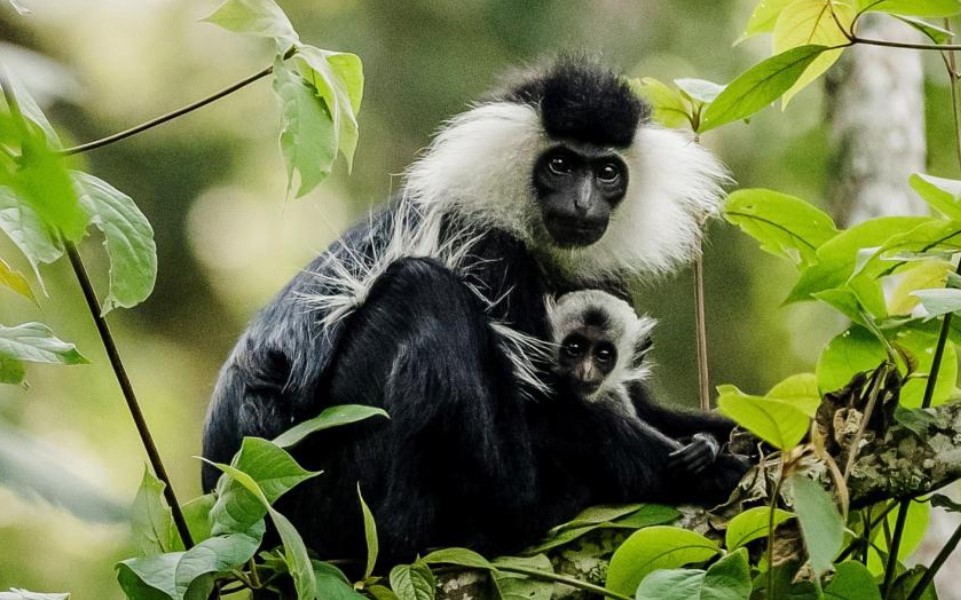
Colubus Monkey in Nyungwe Forest
Another highlight is the Ruwenzori colobus monkey, often seen in large troops of up to 400 individuals, one of the largest groups recorded anywhere in Africa. You may also encounter L’Hoest’s monkeys, silver monkeys, vervet monkeys, red-tailed monkeys, and grey-cheeked mangabeys moving gracefully through the mid-canopy.
Birdwatching in Nyugwe
For bird enthusiasts, Nyungwe is a paradise. The park hosts over 300 bird species, including 30 Albertine Rift endemics, species that exist only in this region. Birders often search for the striking Ruwenzori turaco, Grauer’s swamp warbler, red-collared mountain babbler, and stripe-breasted tit.
Bird watching in Nyungwe Forest
The forest’s varied altitudes and vegetation create ideal birding conditions year-round, with the best visibility during the dry months of June to September and December to February.
Beyond the Trees: Mammals and Other Wildlife
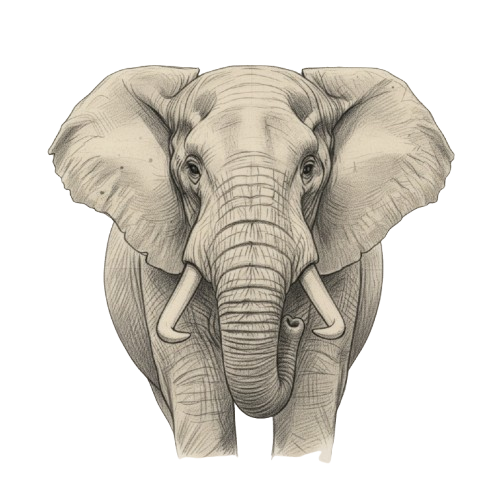
While primates and birds steal the spotlight, Nyungwe shelters around 85 mammal species, including bushbucks, duikers, mongoose, and elusive forest elephants. If you’re lucky, you might glimpse a serval cat stalking silently through the undergrowth or a Congo clawless otter playing along forest streams.
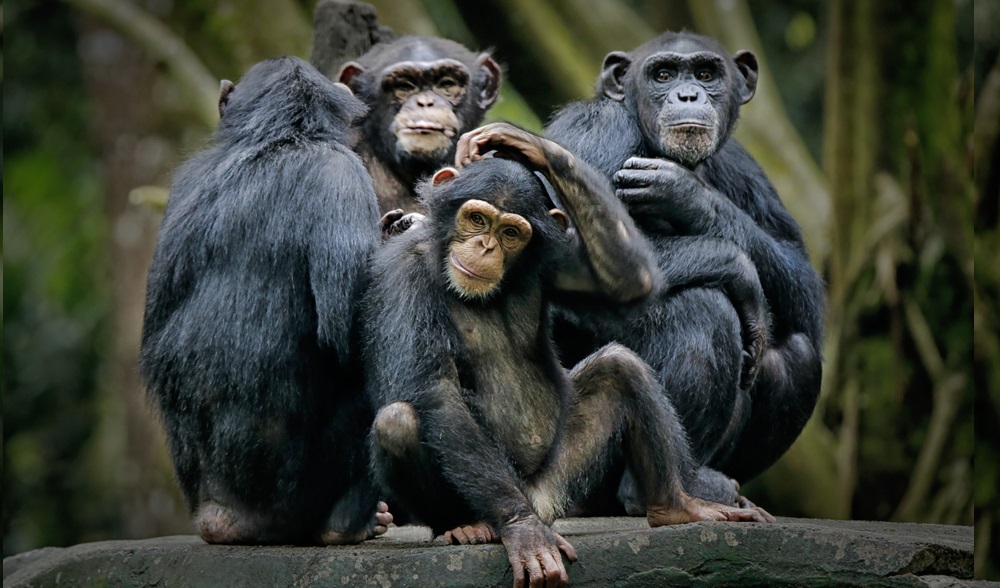
Chimpanzee Trekking inside Nyungwe Forest
Reptiles, amphibians, and countless butterfly species add color and life to the ecosystem, particularly after rainfall, when the forest hums with movement and sound.
Unique Ecosystems and Conservation
Nyungwe’s incredible diversity is rooted in its geography, a high-altitude rainforest ranging from 1,600 to 2,950 meters above sea level. The park’s habitats include montane forests, bamboo thickets, swamps, and open grasslands, each supporting different species.
Rwanda’s strong conservation policies, managed by the Rwanda Development Board (RDB), and community-based tourism programs have made Nyungwe a model of sustainable ecotourism. Every visit directly contributes to preserving this ancient forest and the livelihoods of nearby communities.
How to Experience Nyungwe’s Wildlife
Visitors can explore the park through a range of guided activities:
- Chimpanzee trekking in Uwinka or Cyamudongo
- Colobus monkey tracking along the Gisakura trail
- Birdwatching walks with expert guides
- Forest hikes across trails like Isumo Waterfall and Igishigishigi
- The breathtaking canopy walkway, where you can spot primates and birds at eye level above the treetops
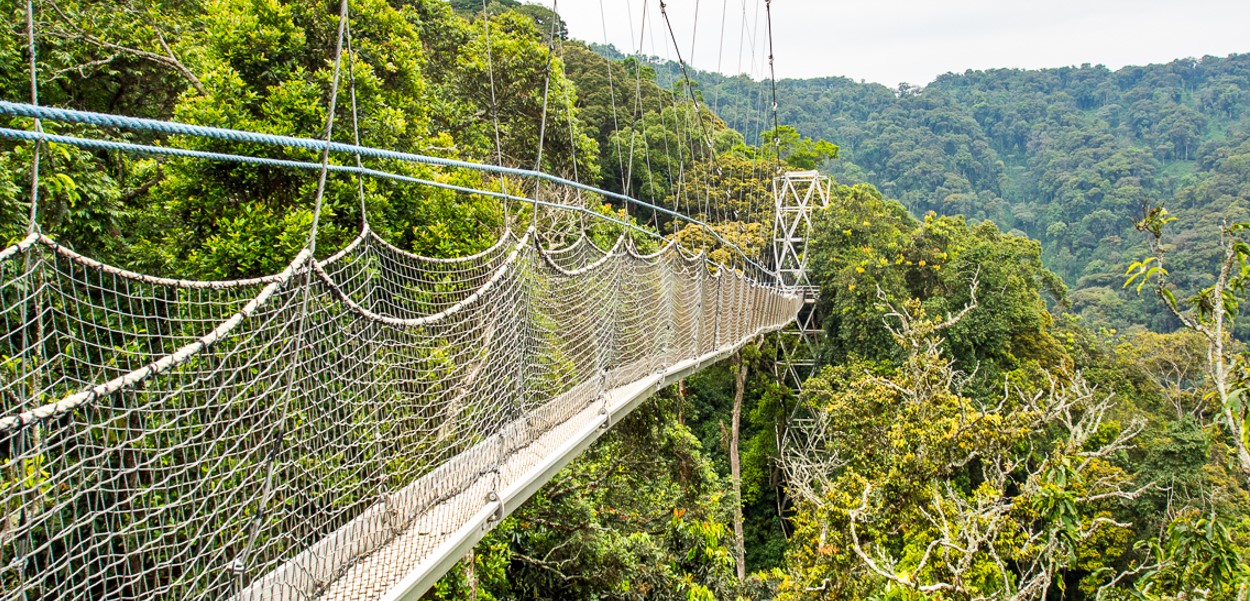
Canopy walk in Nyungwe Forest
Best Time to Visit for Wildlife
Wildlife can be seen all year, but the dry seasons (June-September and December-February) offer the best conditions for trekking and photography. During these months, trails are less slippery, and visibility is higher for spotting primates and birds. More About Best time to visit Nyungwe